Passwords are dying — security is evolving.
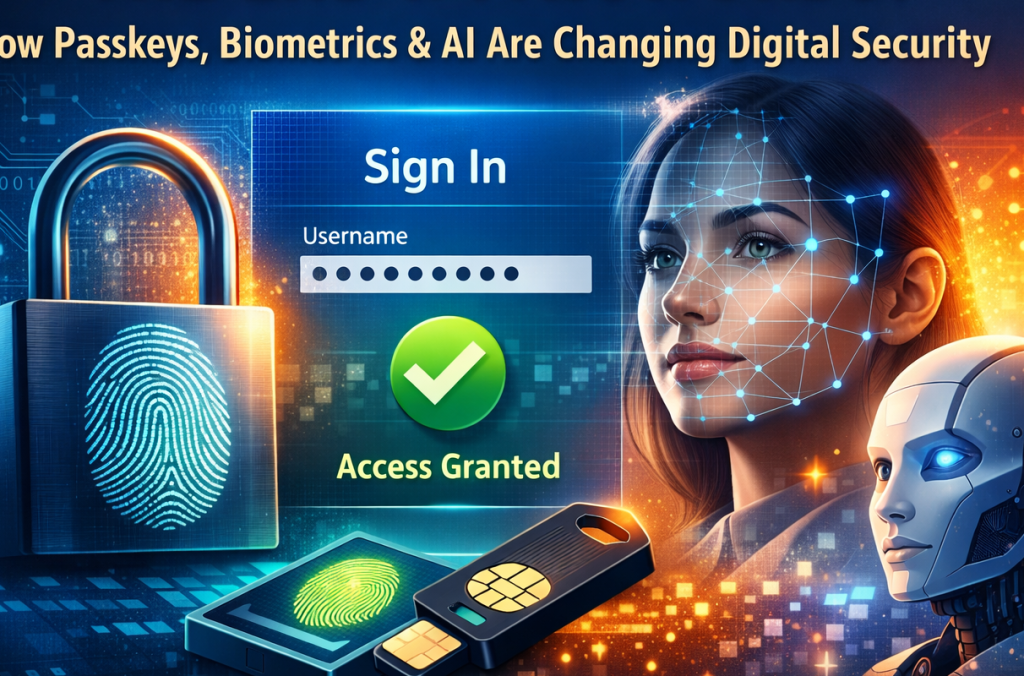
Introduction: Are Passwords Finally Becoming Obsolete?
For the past years now, passwords have been the gatekeepers of the digital world. From email accounts and social media profiles to banking apps and cloud storage, passwords have been the primary method of online security. I remember when I bought my first Nokia phone in 2010, the first thing I learnt was how to enable password on it. This I did to aviod unauthorized access to my phone. Yet despite all this, passwords have consistently failed to keep users safe.
Data breaches, phishing attacks, and identity theft continue to rise globally. Weak passwords, reused credentials, and human error make traditional authentication dangerously unreliable. This is why experts now believe we are witnessing the end of passwords in digital security.
As we all can see, a new era is emerging—powered by passkeys, biometric authentication, and AI-driven cybersecurity. These technologies promise stronger protection, better user experience, and a safer internet for everyone.
Why Passwords Are No Longer Secure
Passwords were never designed to match the complexity of today’s digital world. Modern users manage dozens of online accounts, making it nearly impossible to create and remember strong, unique passwords for each platform.
I’ve noticed that some of the common password problems include:
- Reusing the same password across multiple sites
- Choosing weak or predictable passwords
- Falling victim to phishing scams
- Passwords being exposed in data breaches
Hence, cybercriminals exploit these weaknesses daily, which is why password-based authentication is no longer sufficient.
Why passwords are no longer secure online
The Rise of Passwordless Authentication
Passwordless authentication replaces traditional passwords with more secure and user-friendly alternatives. Instead of relying on something you remember, modern security systems rely on:
- Something you have
- Something you are
This shift dramatically reduces the risk of hacking, phishing, and credential theft.
Tech giants like Google, Apple, and Microsoft are already pushing passwordless login systems, signaling a major industry-wide transformation.
Passwordless authentication methods explained
Want to become a successful enterpreneur, get full details and guide by downloading the book below!
What Are Passkeys and How Do They Work?
Passkeys are cryptographic login credentials that replace passwords entirely. They are stored securely on your device. However, these are tied to biometric authentication such as fingerprints or facial recognition.
Unlike passwords:
- Passkeys cannot be guessed
- They cannot be reused across websites
- They cannot be stolen through phishing
When you log in using a passkey, your device proves your identity without sending sensitive data over the internet.
This makes passkeys one of the most secure login methods available today.
How passkeys replace traditional passwords
Biometric Security: Your Body as the Key
Biometric authentication uses unique biological traits to verify identity. These include:
- Fingerprints
- Facial recognition
- Voice recognition
- Iris scanning
Because biometric data is unique to each person, it is far harder to replicate or steal than passwords.
Smartphones, laptops, and banking apps now widely use biometric security for online authentication, offering both convenience and enhanced protection.
Is Biometric Security Safe?
Since the common concern is privacy. Users worry about how biometric data is stored and protected.
The good news is that most modern systems:
- Store biometric data locally on devices
- Encrypt data securely
- Never transmit raw biometric information
This makes biometric login safer than passwords in most real-world scenarios.
Is biometric security safer than passwords
Looking for course that can help you sclae your income, check this one on the link below!
The Role of AI in Modern Cybersecurity
It’s now very clear that Artificial Intelligence is playing a critical role in redefining digital security. AI systems can analyze vast amounts of data in real time, detecting unusual behavior that humans would miss.
AI is used to:
- Detect fraud instantly
- Identify suspicious login attempts
- Prevent brute-force attacks
- Monitor user behavior patterns
This allows companies to stop cyber threats before damage occurs.
How AI improves cybersecurity systems
AI-Powered Threat Detection and Prevention
Traditional security systems react after attacks happen. AI-driven systems are proactive.
We can now use AI to:
- Predict potential breaches
- Block suspicious IP addresses
- Flag abnormal account activity
- Adapt to new hacking techniques
This makes AI cybersecurity solutions essential in fighting modern cybercrime.
Why Hackers Hate Passwordless Security
Hackers thrive on weak credentials and human mistakes. Passwordless systems remove these vulnerabilities.
Passkeys, biometrics, and AI:
- Eliminate phishing attacks
- Reduce credential theft
- Make brute-force attacks useless
As a result, passwordless login systems dramatically reduce cyber attack success rates.
Major Companies Already Moving Away From Passwords
Leading tech companies are accelerating the transition:
- Google supports passkey login
- Apple integrates biometric authentication across devices
- Microsoft promotes passwordless accounts
This shift shows that the future of authentication is password-free.
Companies adopting passwordless login systems
If you are looking you how to earn through passive income, here is how it works!
Benefits of a Password-Free Future
One important thing you must understand here is that moving beyond passwords offers major advantages. The advantages include:
1. Better Security
No more stolen or guessed passwords.
2. Improved User Experience
Faster logins without memorization.
3. Reduced IT Costs
Fewer password resets and support issues.
4. Stronger Privacy Protection
Less sensitive data stored online.
Challenges of Passwordless Adoption
In the real sense I’ll say that despite its advantages, passwordless security still faces challenges:
- Device dependency
- User education
- Compatibility with older systems
However, as technology evolves, these obstacles are rapidly being addressed.
What This Means for Everyday Internet Users
As an internet user, the transition means:
- Safer online accounts
- Fewer login frustrations
- Better protection against identity theft
Learning how passkeys and biometric security work will soon be as basic as knowing how to create a password once was.
What Will Be The Future of Digital Security?
You will notice that as cyber threats grow more sophisticated, security must evolve faster. The combination of:
- Passkeys
- Biometric authentication
- AI-powered cybersecurity
represents the strongest defense the internet has ever seen.
Passwords will not disappear overnight, but their dominance is clearly ending.
Future of digital security without passwords
How to Prepare for a Passwordless World
I will suggest you start by:
- Enabling biometric login on your devices
- Using passkeys where available
- Avoiding password reuse
- Staying informed about cybersecurity trends
The future belongs to users who adapt early.
Conclusion: Passwords Had Their Time
At this point, I will like to say that passwords served their purpose, but they are no longer enough. In a world of constant cyber threats, relying on memory-based security is risky.
The rise of passkeys, biometric authentication, and AI-driven cybersecurity marks a turning point in how we protect digital identities. These technologies offer stronger security, better convenience, and a safer internet.
The question is no longer if passwords will disappear —
It’s how soon you’ll stop using them.
Have questions or suggestions, kindly let me know at the comment or contact sections.

Nwasir Aguwa Media Empire – Brand Profile Description
Nwasir Aguwa Media Empire is a digital media and online education brand founded by Aguwa Iheariochi Ambrose (Nwasir Aguwa), focused on empowering individuals with practical knowledge in digital skills, online business, content creation, and personal branding.
Built from scratch, the brand represents consistency, innovation, and digital transformation, helping people navigate the modern internet economy through blogging, faceless YouTube content, affiliate marketing, and media strategy. Nwasir Aguwa Media Empire is driven by the belief that anyone can build a profitable and impactful digital presence with the right mindset and skills.
Through high-value content, tutorials, and insights, the brand educates, inspires, and equips audiences to create sustainable online income streams, grow personal brands, and leverage media for long-term success. It stands as a platform for digital empowerment, growth, and legacy building in the digital age.
Discover more from NWASIR AGUWA MEDIA EMPIRE
Subscribe to get the latest posts sent to your email.