“If doctors can stay healthy under pressure, so can you.”
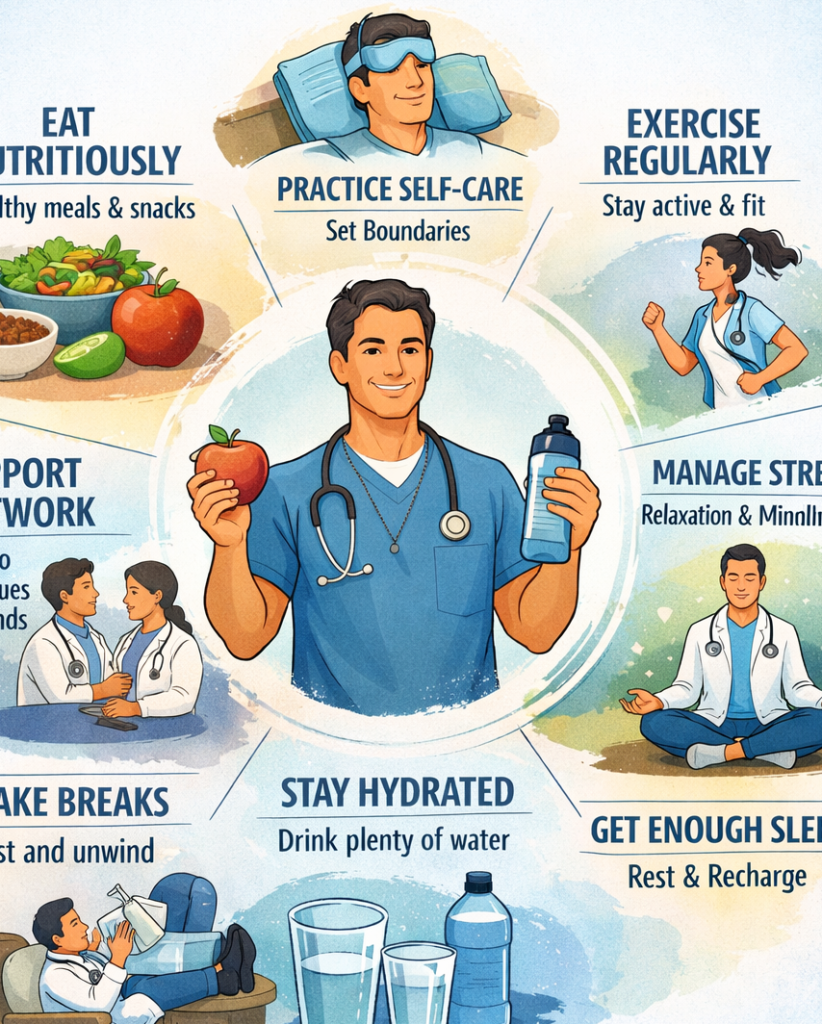
how doctors stay healthySee
Introduction: A Job That Should Break the Body — But Often Doesn’t
I use to think about a doctor’s life. Any time I think of doctors and remember their:
- Long working hours
- Night calls
- Emergency situations
- Emotional pressure
- Life-and-death decisions
If I judge by logic, I will say that doctors should be constantly sick, burned out, and unhealthy.
But on the contrary, many doctors remain mentally sharp, physically active, and surprisingly resilient.
How is this possible?
From what I observed, it’s obvious that doctors don’t rely on luck. They rely on systems, boundaries, and intentional habits that protect their health — even under extreme pressure.
Follow me as we uncover how doctors stay healthy despite stress, night calls, and long working hours — and how you can apply the same principles.
doctors and stress management
1. Doctors Accept Stress — But Don’t Live Inside It
Doctors know stress is part of their job. What they don’t do is carry it everywhere.
They try to:
- Focus intensely during work
- Release stress after shifts
- Avoid replaying cases endlessly
Doctors understand:
Stress is inevitable. Chronic stress is optional.
They separate:
- Work time
- Recovery time
- Personal time
💡 Doctor mindset: Stress should visit — not move in.
healthy habits of busy doctors
2. They Build Recovery Into Their Schedule
One key observation is that doctors don’t wait to “feel free” before resting.
They also:
- Nap when possible
- Rest after night calls
- Reduce activity after exhausting shifts
Patients often believe rest must be earned.
Doctors know rest is required.
💡 Doctor rule: Recovery is not laziness — it’s maintenance.
managing stress and long work hours
3. Doctors Prioritize Sleep Whenever Possible
Even with series of night calls, doctors protect sleep.
They:
- Sleep immediately after shifts
- Avoid unnecessary late nights
- Catch up on rest strategically
Doctors understand that:
Sleep loss weakens immunity faster than stress itself.
Instead of fighting sleep deprivation, they manage it.
💡 Doctor habit: Sleep whenever the opportunity appears.
4. They Eat for Energy, Not Just Satisfaction
Doctors don’t always eat perfectly — but they eat purposefully.
They choose foods that:
- Sustain energy
- Prevent crashes
- Support digestion
They avoid heavy meals during stressful periods because they know digestion affects focus and stamina.
💡 Doctor approach: Eat to function, not just to feel full.
5. Doctors Stay Physically Active in Simple Ways
Most doctors don’t have time for long gym sessions.
So they:
- Walk frequently
- Stretch between tasks
- Stay mobile during the day
They know movement:
- Relieves stress
- Improves circulation
- Prevents stiffness
💡 Doctor truth: Small movement beats no movement.
6. They Set Emotional Boundaries With Patients
Doctors care deeply — but they don’t absorb everything emotionally.
They:
- Show empathy without emotional overload
- Separate personal identity from patient outcomes
- Seek balance between compassion and protection
This prevents:
- Emotional exhaustion
- Burnout
- Mental breakdown
💡 Doctor skill: Caring without self-destruction.
7. Doctors Don’t Glorify Overworking
Unlike many professionals, doctors don’t always celebrate exhaustion.
They know:
- Overworking lowers performance
- Fatigue causes mistakes
- Burnout harms patients and doctors alike
They respect limits because they’ve seen the cost of ignoring them.
💡 Doctor belief: A healthy doctor saves more lives.
8. They Control What They Can Control
Doctors can’t control emergencies — but they control habits.
They always manage:
- Diet
- Sleep windows
- Stress reactions
- Personal time
Instead of complaining about what’s impossible, they optimize what’s possible.
💡 Doctor mindset: Control habits, not chaos.
doctor lifestyle secrets
9. Doctors Watch for Burnout Signs Early
Doctors recognize burnout symptoms early:
- Emotional numbness
- Constant irritability
- Loss of motivation
- Chronic fatigue
When they notice these signs, they:
- Slow down
- Seek rest
- Adjust schedules
- Talk to colleagues
💡 Doctor wisdom: Burnout treated early is reversible.
doctor lifestyle tips
10. They Think Long-Term, Not Just Survive Today
I’ve noticed that doctors don’t live only for today’s shift.
They think in terms of:
- Career longevity
- Physical endurance
- Mental sustainability
They ask:
“Can I live like this for 10 more years?”
That question shapes their choices.
💡 Doctor philosophy: Longevity matters more than heroism.
staying healthy under pressure
Why Most People Struggle Under Stress
Many people struggle under stress because they:
- Ignore recovery
- Sleep poorly
- Eat badly under pressure
- Carry stress home
Doctors learn early that:
Stress must be managed — or it will manage you.
How You Can Apply Doctor-Level Stress Survival
You don’t need hospital shifts to use these habits.
Start with:
- Protecting sleep
- Creating recovery time
- Managing stress intentionally
- Respecting your limits
- Thinking long-term
Health is not about avoiding stress — it’s about recovering from it properly.
staying healthy under stress
Final Thoughts
It’s now quite clear that doctors stay healthy under pressure because they respect their bodies, minds, and limits.
Stress didn’t break them — poor habits would have.
If doctors can stay healthy in chaos, you can stay healthy in everyday life.
Tags
Doctor lifestyle
Stress management
Healthy habits
Work-life balance
Mental wellness
Preventive health
Have questions or suggestions based on this content, kindly let me know at the comment or contact sections.

Nwasir Aguwa Media Empire – Brand Profile Description
Nwasir Aguwa Media Empire is a digital media and online education brand founded by Aguwa Iheariochi Ambrose (Nwasir Aguwa), focused on empowering individuals with practical knowledge in digital skills, online business, content creation, and personal branding.
Built from scratch, the brand represents consistency, innovation, and digital transformation, helping people navigate the modern internet economy through blogging, faceless YouTube content, affiliate marketing, and media strategy. Nwasir Aguwa Media Empire is driven by the belief that anyone can build a profitable and impactful digital presence with the right mindset and skills.
Through high-value content, tutorials, and insights, the brand educates, inspires, and equips audiences to create sustainable online income streams, grow personal brands, and leverage media for long-term success. It stands as a platform for digital empowerment, growth, and legacy building in the digital age.
Discover more from NWASIR AGUWA MEDIA EMPIRE
Subscribe to get the latest posts sent to your email.