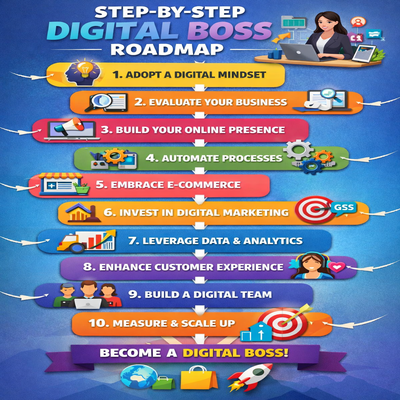
We are now in the world where running a business traditionally—think manual bookkeeping, physical stores, and word-of-mouth marketing—is no longer enough to stay competitive. If you look at what is going on right now, you will see that the digital era has revolutionized how businesses operate, making it easier than ever to reach global markets, streamline operations, and increase profits. Transitioning from a traditional business to becoming a “digital boss” is no longer optional; it’s essential. But how exactly can you make this migration successfully? This blog will guide you through the steps. Let’s dive in:
1. Understand the Digital Mindset
One thing I will like to share with you is that; before you dive into technology, it’s crucial to develop a digital mindset. Traditional business owners often rely on established methods that have worked in the past. However, the digital world requires:
- Adaptability: Technology changes constantly, and strategies that work today may not work tomorrow.
- Data-driven decision-making: Instead of guessing what customers want, use analytics and metrics to make informed decisions.
- Customer-centric approach: Digital businesses thrive by solving problems efficiently for their audience.
Start by observing successful digital entrepreneurs and study their methods. Attend webinars, take online courses, and read blogs about digital business management. Your mindset shift is the foundation of your migration.
2. Evaluate Your Current Business Model
Also, before moving online, assess your current business operations. Ask yourself the following question:
- Which processes can be automated?
- Which products or services can be sold online?
- Are my customers online or offline?
For example, a local clothing store can start selling on e-commerce platforms or social media. A service-based business can offer virtual consultations or online courses. Knowing what works digitally will help you create a practical migration strategy.
3. Build a Strong Online Presence
I know you may like to become a digital boss, but to do that, your business must have visibility online. Here’s how:
a. Create a Professional Website
Having a website is one of the first steps to register yourself online. Your ability to exist in the World Wide web (www), is the key towards becoming a digital boss. I was very excited the first day I search my name in google search engine and discovered that I have began to exist online. I want you to understand that a website acts as your digital headquarters. It should:
- Be visually appealing and user-friendly
- Provide clear information about your products or services
- Include contact forms, payment options, and customer support
Platforms like WordPress, Wix, and Shopify make it easy to create websites without coding experience.
b. Leverage Social Media
Although a lot of things is going on inside the social media, but I tell you, social media platforms like Instagram, TikTok, LinkedIn, and Facebook are excellent for building brand awareness. If you want to become a digital boss, focus on platforms where your target audience spends most of their time. Use social media for the following purposes:
- To Showcase products or services
- To Share valuable content
- To Engage directly with customers
Consistency is key. Posting regularly and responding to comments can help you establish authority and trust.
c. Email Marketing
Email marketing is still one of the most effective digital tools. Collect emails through your website or social media campaigns and send personalized messages, promotions, or educational content. Tools like Mailchimp, ConvertKit, and Sendinblue make this simple.
Looking for a profitable digital skill to learn, here’s what I recommend for you now!
4. Automate Business Processes
Days are gone when everything about business was done manually. Traditional businesses often waste time on repetitive tasks. Manual efforts kill productivity, but digital tools allow you to automate processes such as:
- Accounting and bookkeeping (QuickBooks, Xero)
- Inventory management (Zoho Inventory, TradeGecko)
- Customer service (chatbots like Tidio or Drift)
- Social media posting (Buffer, Hootsuite)
Automation frees up your time to focus on strategic decisions and growth.
5. Adopt E-commerce and Online Sales Channels
Understand that selling online is non-negotiable in the digital era. Depending on your business, you can:
- Set up a store on Shopify, WooCommerce, or BigCommerce
- Sell through marketplaces like Amazon, eBay, and Etsy
- Utilize social commerce on Instagram Shopping or Facebook Marketplace
Ensure you optimize product listings with high-quality images, compelling descriptions, and competitive pricing. Digital businesses thrive on convenience and accessibility.
6. Invest in Digital Marketing
Traditional marketing methods like flyers and newspaper ads are becoming less effective. Digital marketing allows you to reach a larger, targeted audience. Key strategies include the following:
a. Search Engine Optimization (SEO)
SEO improves your website’s visibility on Google. Focus on:
- Keyword research
- Quality content creation
- Mobile-friendly website design
Ranking higher in search results drives organic traffic without ongoing ad costs.
b. Paid Advertising
Paid ads on Google Ads or Facebook Ads help you reach specific demographics quickly. Start small, test ad performance, and scale what works.
c. Content Marketing
Creating valuable content positions you as an authority in your niche. Examples include:
- Blog posts
- Videos
- Infographics
- Podcasts
This attracts organic traffic and builds trust with your audience.
After learning from these tech icons, I was greatly motivated in my tech journey!
7. Use Data to Make Smart Decisions
One of the biggest advantages of digital businesses is access to data. Analytics tools like Google Analytics, Facebook Insights, and HubSpot provide valuable insights:
- Who your customers are
- Which products are performing best
- Where traffic is coming from
Use this data to refine marketing campaigns, improve products, and optimize your overall strategy. A data-driven approach ensures your business grows efficiently.
8. Enhance Customer Experience
Digital customers expect convenience and excellent service. Steps to enhance experience include:
- Providing fast, reliable customer support
- Offering multiple payment options
- Simplifying the checkout process
- Collecting and acting on feedback
Happy customers are more likely to return and recommend your business to others. In the digital world, word-of-mouth spreads faster than ever.
9. Stay Updated with Technology Trends
Technology evolves rapidly. So, in order to stay ahead, I suggest the following:
- Follow industry news and updates
- Experiment with emerging tools like AI, automation, or AR/VR
- Attend digital business webinars and online conferences
Being proactive keeps you competitive and prevents your business from becoming obsolete.
10. Cultivate a Digital Team
I have never seen a digital boss that works alone. Consider building a team of skilled individuals:
- Social media managers
- Content creators
- Virtual assistants
- Digital marketing specialists
Outsourcing or hiring remotely allows you to scale operations without geographic limitations.
This online course is changing the financial game for many!
11. Mindset Shift: From Business Owner to Digital Boss
Becoming a digital boss isn’t just about technology—it’s about leadership and vision. You must take note of these:
- Embrace innovation
- Take calculated risks
- Constantly learn and adapt
A digital boss sees challenges as opportunities, leverages tools for efficiency, and leads a team that is aligned with the digital vision.
12. Start Small, Scale Gradually
If you want to become a digital boss, it doesn’t happen over night. Many traditional business owners make the mistake of trying to digitize everything at once. Instead:
- Start with one product, service, or process online
- Test performance and customer response
- Adjust and improve before scaling
This reduces risks and ensures you build a solid digital foundation.
13. Measure Success and Iterate
Finally, set clear goals and track your progress. Key metrics include:
- Website traffic
- Conversion rates
- Customer acquisition cost
- Return on investment (ROI)
Digital businesses thrive on continuous improvement. Regularly analyze results and iterate strategies for better performance.
Conclusion
As I conclude, I want to say that transitioning from a traditional business to a digital enterprise is a journey, not an overnight transformation. By adopting a digital mindset, building an online presence, leveraging automation, and focusing on customer experience, you can become a successful digital boss. The opportunities in the digital world are endless, and with the right strategy, your business can reach new heights of growth, efficiency, and profitability.
Embrace technology, stay adaptable, and lead with vision—your digital empire awaits.

Nwasir Aguwa Media Empire – Brand Profile Description
Nwasir Aguwa Media Empire is a digital media and online education brand founded by Aguwa Iheariochi Ambrose (Nwasir Aguwa), focused on empowering individuals with practical knowledge in digital skills, online business, content creation, and personal branding.
Built from scratch, the brand represents consistency, innovation, and digital transformation, helping people navigate the modern internet economy through blogging, faceless YouTube content, affiliate marketing, and media strategy. Nwasir Aguwa Media Empire is driven by the belief that anyone can build a profitable and impactful digital presence with the right mindset and skills.
Through high-value content, tutorials, and insights, the brand educates, inspires, and equips audiences to create sustainable online income streams, grow personal brands, and leverage media for long-term success. It stands as a platform for digital empowerment, growth, and legacy building in the digital age.
Discover more from NWASIR AGUWA MEDIA EMPIRE
Subscribe to get the latest posts sent to your email.