✍️ Introduction
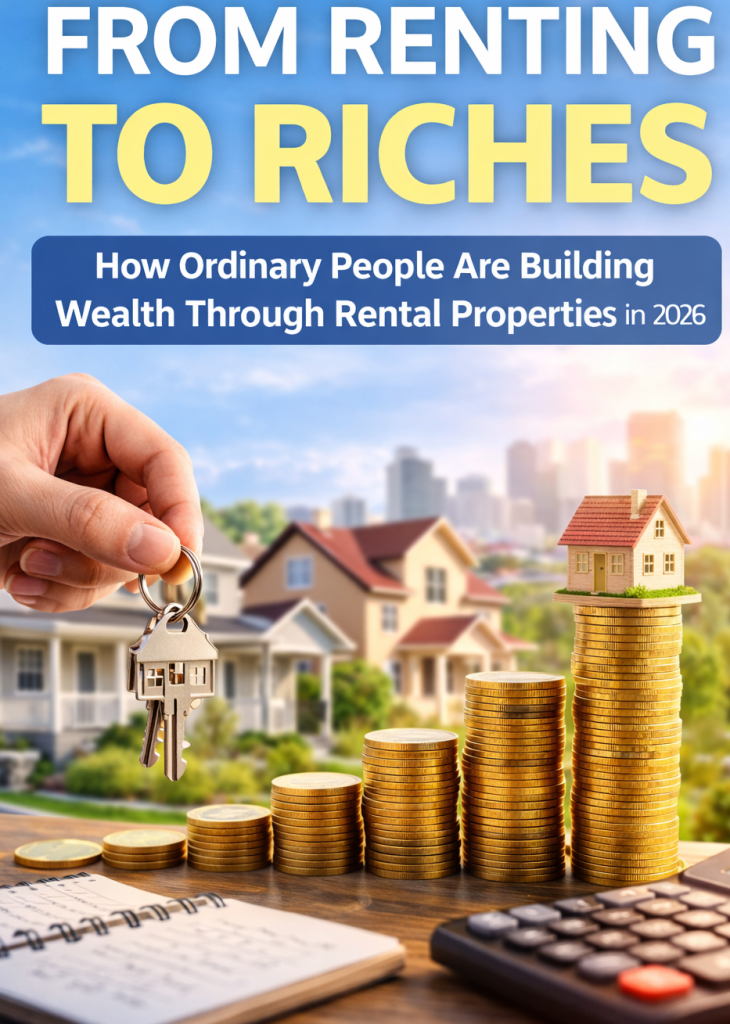
I can see that many people dream of financial freedom, but the truth is that only a few realize it through rental property investment. For decades, the perception was that real estate wealth was reserved for the rich or experienced investors. In this 2026, that barrier is disappearing. Ordinary people across the globe are using rental properties to generate steady income and long-term wealth—even starting with limited capital.
Whether it’s a small apartment in a growing city, a vacation rental in a tourist hotspot, or a single-family home in a developing suburb, the principles of building wealth through rentals remain consistent. In this article I will show how everyday people are taking control of their finances, leveraging rental income, and turning ordinary properties into extraordinary wealth-building machines.
How to build wealth with rental properties
🌟 Why Rental Properties Are Still the Best Wealth-Building Tool
1. Housing Is Always in Demand
From my own view, I will say that renting is a necessity. No matter the economy, people need shelter. This creates consistent rental demand, which translates into steady cash flow for property owners. Unlike stocks or crypto, rental properties generate tangible income every month.
2. Properties Appreciate Over Time
I ‘ll like you to understand that while cash flow is the short-term benefit, property appreciation is the long-term reward. Urban expansion, infrastructure development, and economic growth drive property prices upward, often outpacing inflation.
3. Tax Advantages
It’s quite clear that many countries offer tax deductions for mortgage interest, property taxes, depreciation, and property management expenses. Savvy investors reduce taxable income while maximizing returns.
4. Hedge Against Inflation
One important thing I’ve observed is that rent typically rises with inflation, protecting investors’ real income. Real estate remains one of the few asset classes that can both generate income and preserve value in inflationary environments.
🏁 Getting Started: How Ordinary People Begin
I want to let your know that you don’t need millions to start building wealth through rental properties. Many successful investors began with just one modest property.
Step 1: Identify the Right Market
I’ll suggest that you start with locations that have growing populations, employment opportunities, and rental demand. Even small cities or emerging suburbs can deliver attractive returns if chosen wisely.
Step 2: Start Small
- Single-room units or small apartments for beginners
- House hacking: live in one unit and rent out the others
- Short-term vacation rentals in tourist-friendly areas
Rental real estate for ordinary people
Step 3: Financing Options
- Mortgages: The most common method; rental income often covers repayments.
- Partnerships: Pool capital with trusted partners to acquire larger properties.
- Seller Financing: Negotiate payment plans with sellers.
- Cooperative Housing/REITs: Small investors can buy shares in rental portfolios.
🧠 Maximizing Cash Flow
1. Understand Expenses
Since every property has costs: maintenance, taxes, insurance, and vacancy periods. What this means is that you sholud budget conservatively to ensure positive cash flow even during tough months.
2. Rent Strategically
I’ll also advice that you set competitive rental prices by researching similar properties in the area. Too high can result in vacancies; too low reduces profit.
3. Choose Short-Term vs Long-Term Rentals
- Long-term rentals provide stability and consistent monthly income.
- Short-term rentals (like Airbnb) can yield higher profits but require more management.
- Many investors blend both strategies depending on location.
4. Property Management Tools
Technology simplifies management:
- Online rent collection
- Maintenance tracking apps
- Digital lease agreements
- Tenant screening services
Some investors outsource management entirely to local property managers, freeing up time while ensuring smooth operations.
Short-term rental investment tips
🚀 Scaling the Portfolio
Once the first property is profitable, investors often use equity and rental income to acquire additional units. Strategies include:
- Refinancing: Take advantage of increased property value to finance new investments.
- Diversification: Invest in multiple locations to reduce local market risk.
- Portfolio Mix: Combine residential, short-term rentals, and small commercial properties for stability and growth.
Scaling gradually reduces risk while increasing wealth potential.
💡 Common Mistakes to Avoid
- Overestimating Income: Always use conservative estimates for rent and appreciation.
- Underestimating Costs: Factor in repairs, insurance, and taxes.
- Ignoring Market Research: Location is critical. Even a great property in the wrong market may underperform.
- Poor Tenant Selection: Vet tenants carefully to reduce the risk of damage or late payments.
- Neglecting Management: DIY management is possible but can be stressful; consider outsourcing if cash flow allows.
🔑 Case Example: Ordinary Investor Success
I want you to consider Sarah, a teacher in her late 20s, who purchased a modest 2-bedroom apartment in a growing suburb with $25,000 down payment. By renting it long-term, she covered her mortgage while building equity. Within five years, she leveraged the property’s appreciated value to acquire two more units, creating a small rental portfolio that now generates over $3,000/month in passive income.
This is not unique—many ordinary people around the world replicate this model with patience, planning, and discipline.
📊 The Numbers Game
For a hypothetical $100,000 property:
- Mortgage: $700/month
- Rent: $1,200/month
- Expenses (tax, insurance, maintenance): $300/month
Net Cash Flow: $200/month (conservative estimate)
Over time:
- Property value appreciates at 5–7% annually
- Monthly income increases with rent
- Equity builds steadily
Even small cash flow grows into significant wealth when combined with portfolio expansion and reinvestment.
🔮 The Future of Rental Wealth in 2026
- Tech-driven management: AI and platforms like Zillow, Airbnb, and property apps simplify operations.
- Global opportunities: Cross-border rental markets are opening up to remote investors.
- Short-term rental growth: Tourism-driven rentals continue to outperform traditional long-term rentals in key markets.
By leveraging technology and starting small, ordinary people are increasingly building wealth without waiting decades.
Passive income from rental properties
✅ Conclusion
At this point, I’ll say that rental properties remain one of the most reliable wealth-building tools. For ordinary people, they provide a combination of steady income, long-term appreciation, and financial security.
Starting with one modest property, using conservative budgeting, and scaling gradually can turn rental investments into a powerful wealth-building engine. With careful planning, even small investors can join the ranks of successful property owners and achieve financial freedom in 2026 and beyond.
🏷️ Tags
Rental properties, passive income, property investment, real estate wealth, financial freedom, buy-to-let, rental income
Have questions or suggestions, kindly let me know at the comment or contact sections.

Nwasir Aguwa Media Empire – Brand Profile Description
Nwasir Aguwa Media Empire is a digital media and online education brand founded by Aguwa Iheariochi Ambrose (Nwasir Aguwa), focused on empowering individuals with practical knowledge in digital skills, online business, content creation, and personal branding.
Built from scratch, the brand represents consistency, innovation, and digital transformation, helping people navigate the modern internet economy through blogging, faceless YouTube content, affiliate marketing, and media strategy. Nwasir Aguwa Media Empire is driven by the belief that anyone can build a profitable and impactful digital presence with the right mindset and skills.
Through high-value content, tutorials, and insights, the brand educates, inspires, and equips audiences to create sustainable online income streams, grow personal brands, and leverage media for long-term success. It stands as a platform for digital empowerment, growth, and legacy building in the digital age.
Discover more from NWASIR AGUWA MEDIA EMPIRE
Subscribe to get the latest posts sent to your email.